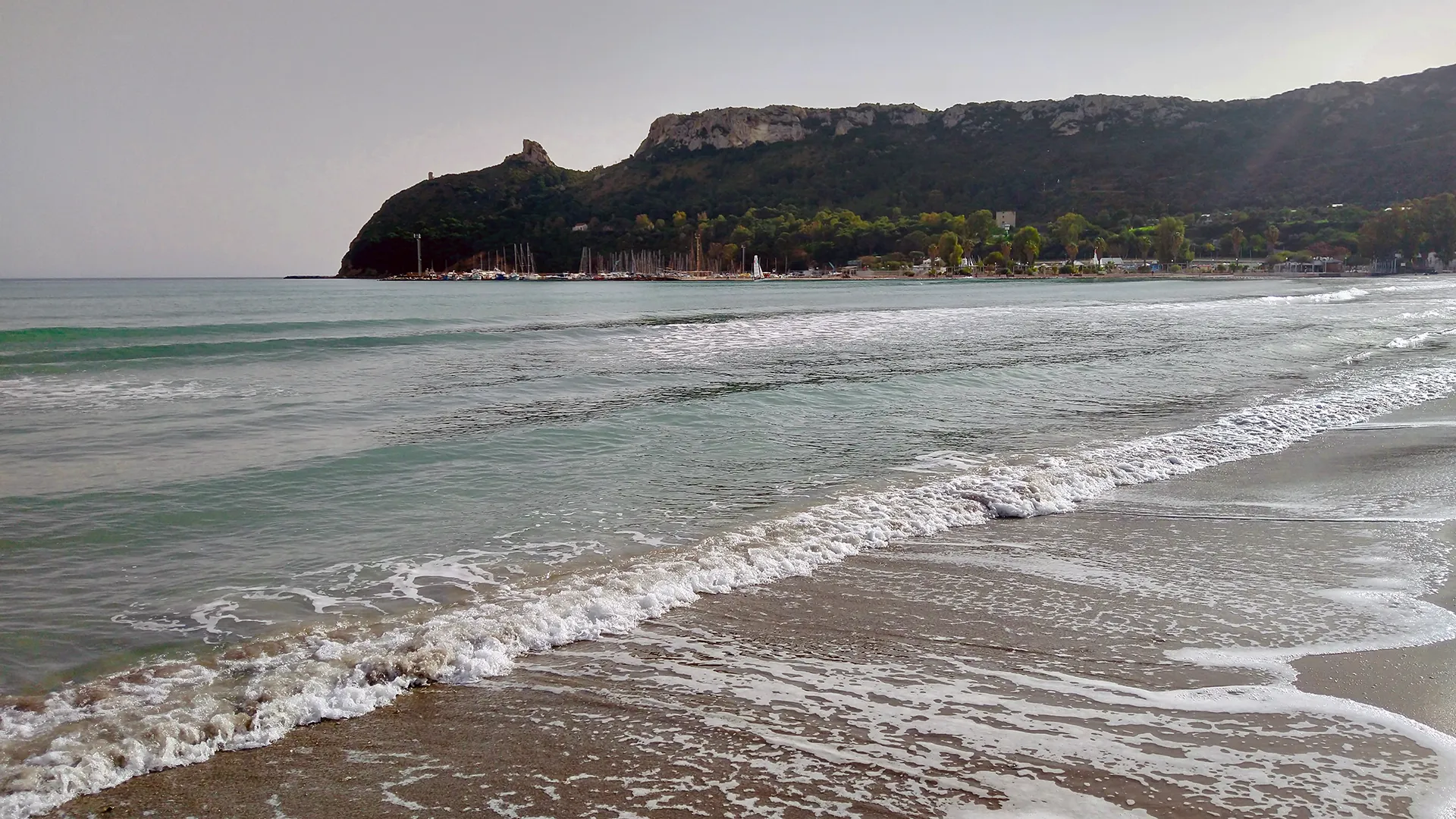
Between the Sella del Diavolo headland and the coast of Quartu Sant’Elena, Poetto is where Cagliari meets the open sea. The beach, promenade and residential district behind them form a familiar landscape for local people, visited for a summer swim and for walks throughout the year.
This everyday relationship has a history. Before the bathing establishments and wooden huts, the area was closely connected to salt production. To understand its changes, it helps to consider the sea, the headland and the waters of Molentargius together: neighbouring places that have served different purposes over time.
A name with several possible origins
The origin of the name Poetto is uncertain. The municipal tourism itinerary mentions the Catalan word pohuet, referring to small wells on the Sella del Diavolo, and the Spanish puerto, meaning harbour. Both interpretations connect the name to the geography of the coast and its water.
The municipal page about the district also recalls a tower known as the “poet’s tower”. These explanations coexist in accounts of the beach’s past. They should be understood as possible origins rather than a single established fact.
From salt production to a city beach
Until the early twentieth century, many people in Cagliari preferred the western side of the gulf for sea bathing. Poetto gradually became more popular as bathing establishments, kiosks and summer facilities developed. Lido and D’Aquila became two landmarks of this new seaside life.
The growth of the city beach did not erase the earlier landscape. The residential district developed between the shore and the Molentargius salt pans, bringing work, homes and leisure close together. Looking beyond the promenade still helps visitors recognise these overlapping uses.
The casotti: memories on the sand
The casotti were wooden huts used as changing rooms and small places to spend time by the sea. Their colours and rows became part of Poetto’s identity and of the memories of families who spent their summer days here.
Their removal, completed in 1986, marked a change in the organisation and use of the beach. The film Poetto: si volta pagina by Giosi Moccia, preserved in the Sardegna Digital Library, records this transition through footage of the dismantling of huts at Poetto and Marina Piccola.
The stops that stayed in everyday speech
People still refer to the first, second or third fermata when describing a meeting point on the beach. These names come from the stops of the tram that once connected the city to the shore and was later replaced by buses. A reference from public transport has remained part of everyday language.
Marina Piccola and the Sella del Diavolo
At the foot of the Sella del Diavolo, Marina Piccola offers a different perspective from the long sweep of sand. Leisure and fishing boats share the small harbour, beneath the headland where the coastline changes direction.
A walk between the harbour and the promenade reveals these relationships while keeping the beach in view. The Sella remains a landmark: its outline and the view across the gulf change as you approach it or move further along the shore.
Molentargius, beyond the promenade
Behind Poetto lies the wetland system of the Molentargius-Saline Regional Nature Park. Salt production ended in 1985, but ponds, channels and buildings preserve its history. The area also has great ecological value, providing resting and breeding places for birds, including flamingos.
The park deserves a separate visit through its authorised entrances and routes. Its proximity to the beach should not obscure the sensitivity of its habitats. Keeping a distance from wildlife and following signs allows visitors to learn about the landscape without disturbing it.
Five things to remember
- A shared coastline: Poetto stretches between Cagliari and Quartu Sant’Elena.
- An uncertain name: wells, a harbour and a tower feature in different explanations of its origin.
- The stops come from the tram: they remain familiar reference points after changes in transport.
- The huts live on in memory: removed in 1986, they are also documented in archive films.
- Salt shaped the landscape: the structures of Molentargius recall an industry that ended in 1985.
Poetto today
A walk along the promenade can include time watching the sea or a visit to Marina Piccola. The experience gains another dimension when today’s beach is considered alongside historical pictures of the huts and the story of the salt pans.
Check current official information for services, transport and access to natural areas. Poetto is part of the city’s everyday life: respecting the beach and its shared spaces means caring for a place used by residents as well as visitors.