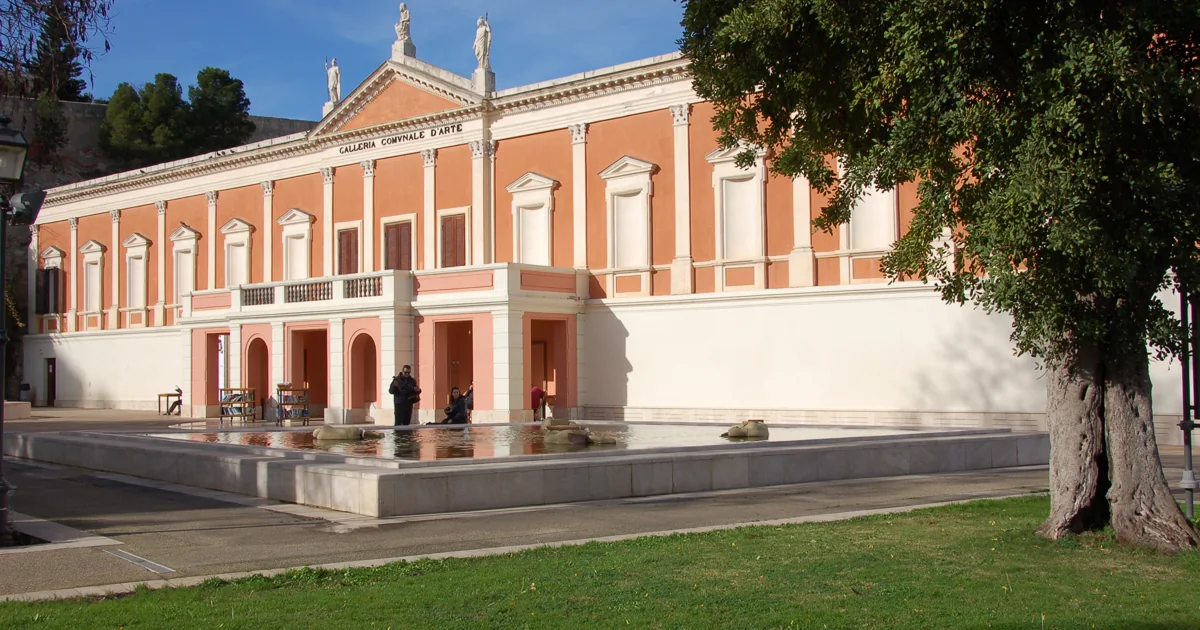
At the top of the highest hill in the historic centre, around one hundred metres above sea level, Castello dominates Cagliari with the outline of its towers, bastions and palaces. In Sardinian it is called Casteddu de Susu, “Upper Castle”, and is the main of the city’s four historic districts. For centuries it was the seat of civil, military and religious power: a true city within the city, protected by walls and accessible through guarded gates.
Its importance is also reflected in a linguistic curiosity: Cagliari is called Casteddu in Sardinian. The fortified citadel eventually came to be identified with the entire city, leaving a trace of its historic centrality in the name that is still used today.
The birth of the Pisan citadel
The district took shape in the 13th century on the initiative of the Pisans. After the destruction of Santa Igia, capital of the giudicato of Càlari, the main seats of power were moved to the hill. Its elevated position provided control over the harbour, the plain and the access routes, while walls, towers and bastions transformed the hilltop into a stronghold.
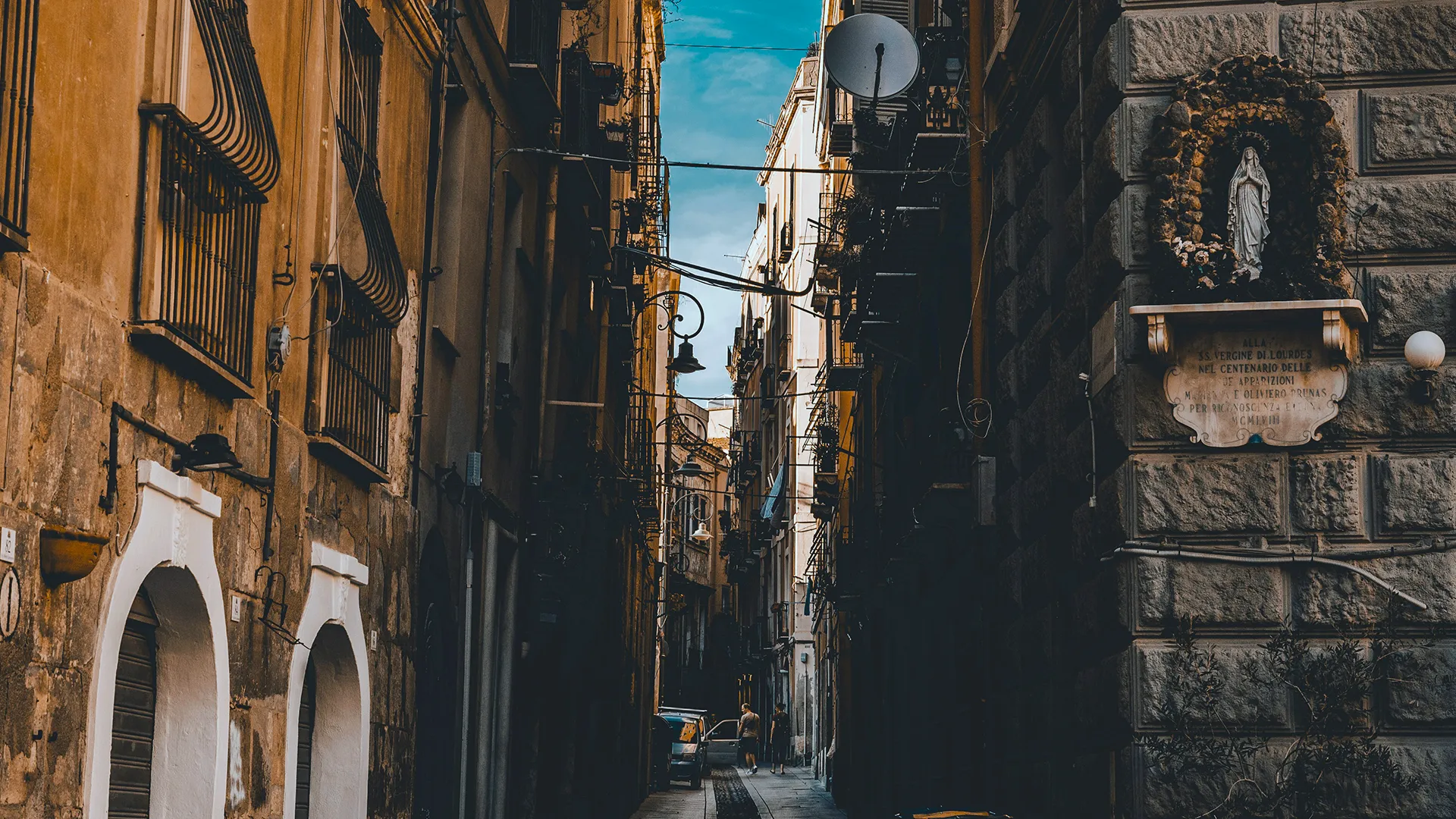
The urban layout still preserves the character of a medieval city: narrow streets, covered passages, stairways and buildings built against the fortifications. Entering Castello meant crossing a clear threshold between the working-class districts at the foot of the hill and the political centre of the city.
The towers of Giovanni Capula
At the beginning of the 14th century, in response to growing Aragonese pressure in the Mediterranean, Pisa strengthened the defences with large towers designed by the architect Giovanni Capula. The Torre di San Pancrazio was completed in 1305 on the northern side; two years later, in 1307, the Torre dell’Elefante was completed to protect the south-western entrance.
The two structures were built from enormous blocks of white limestone. The side facing the interior of the district was open: this lightened the structure and prevented any attackers who captured the tower from easily turning it into a fortress against the city.
The Torre dell’Elefante takes its name from the small sculpture placed on a bracket on the façade. Beneath the arch, elements of the complex closing system made up of gates and portcullises can still be recognised. San Pancrazio, standing more than thirty-six metres high, was instead a privileged observation point over the sea and the hinterland. In later periods both towers lost their sole defensive function and were also used as prisons; the Torre dell’Elefante additionally served as an armoury and powder magazine.
Aragonese, Spanish and Savoy rule: the district of power
With the Aragonese conquest in the 14th century, Castello remained the centre of government. The same was true during the long Spanish period and later under the Piedmontese. Nobles, officials and religious authorities lived within the walls, leaving behind palaces and churches that recount centuries of change.
The institutional heart is Piazza Palazzo. The Cathedral of Santa Maria, the former City Hall, the Archbishop’s Palace and the Palazzo Regio face onto it. The latter became a viceregal residence in 1337 and retained a central political role for centuries. Between 1799 and 1815, during the exile of the House of Savoy from Turin, which was occupied by Napoleonic troops, it was a true royal residence and Cagliari became the political capital of the Kingdom.
A cathedral transformed over the centuries
The Cathedral of Santa Maria was built in Romanesque forms in the 13th century and became an episcopal seat after the abandonment of Santa Igia. The medieval building is chiefly represented by the bell tower, some lintels and parts of the transept. The rest is the result of numerous interventions, reflecting the different cultures that have passed through the city.
The façade also has a surprising history. The Baroque façade, built between 1699 and 1704, was demolished at the beginning of the 20th century in an attempt to rediscover the original Romanesque façade. As the latter had not survived, the church remained without a monumental frontage for years; the present Neo-Romanesque façade was completed in 1933. The medieval bell tower, which also served for lookout duties and communication with the towers, has 137 steps.
The Bastione di Saint Remy, Castello’s modern face
The monument that now introduces many visitors to the district is relatively recent. The Bastione di Saint Remy was built over the ancient defensive walls and incorporated the bastions of the Zecca and Santa Caterina. The Passeggiata Coperta and the Umberto I terrace were designed in 1896 by Giuseppe Costa and Fulgenzio Setti; the complex was inaugurated in 1902.
The Passeggiata Coperta has had very different lives: banquet hall, infirmary during the First World War, shelter for displaced people and exhibition space. In 1943 the staircase and arch were severely damaged by bombing, and were later rebuilt. The Bastione thus became a bridge between the medieval fortress and the modern city, as well as one of the most beloved viewpoints.
Five curiosities to remember
- A district that gives the city its name: the Sardinian word Casteddu shows how closely the stronghold was identified with Cagliari itself.
- An elephant above the gate: the small medieval sculpture is not a modern addition, but the symbol from which the tower takes its name.
- Towers open towards the interior: the U-shaped plan reflected a precise defensive strategy, rather than an unfinished structure.
- A royal residence during exile: between 1799 and 1815, Palazzo Regio housed the Savoy court away from Turin.
- A drawing room built on the walls: the Bastione di Saint Remy transformed ancient military works into a monumental promenade and urban terrace.
Castello today
Today Castello is home to institutions, residences, shops, museums and places of worship. The best way to get to know it is to explore it slowly: climb from the Bastione, reach Piazza Palazzo, continue towards San Pancrazio and the Cittadella dei Musei, then look out from the bastions of Santa Croce. Amid pale stone, shadowed alleyways and sudden views over the gulf, every turn brings medieval Cagliari into dialogue with the contemporary city.